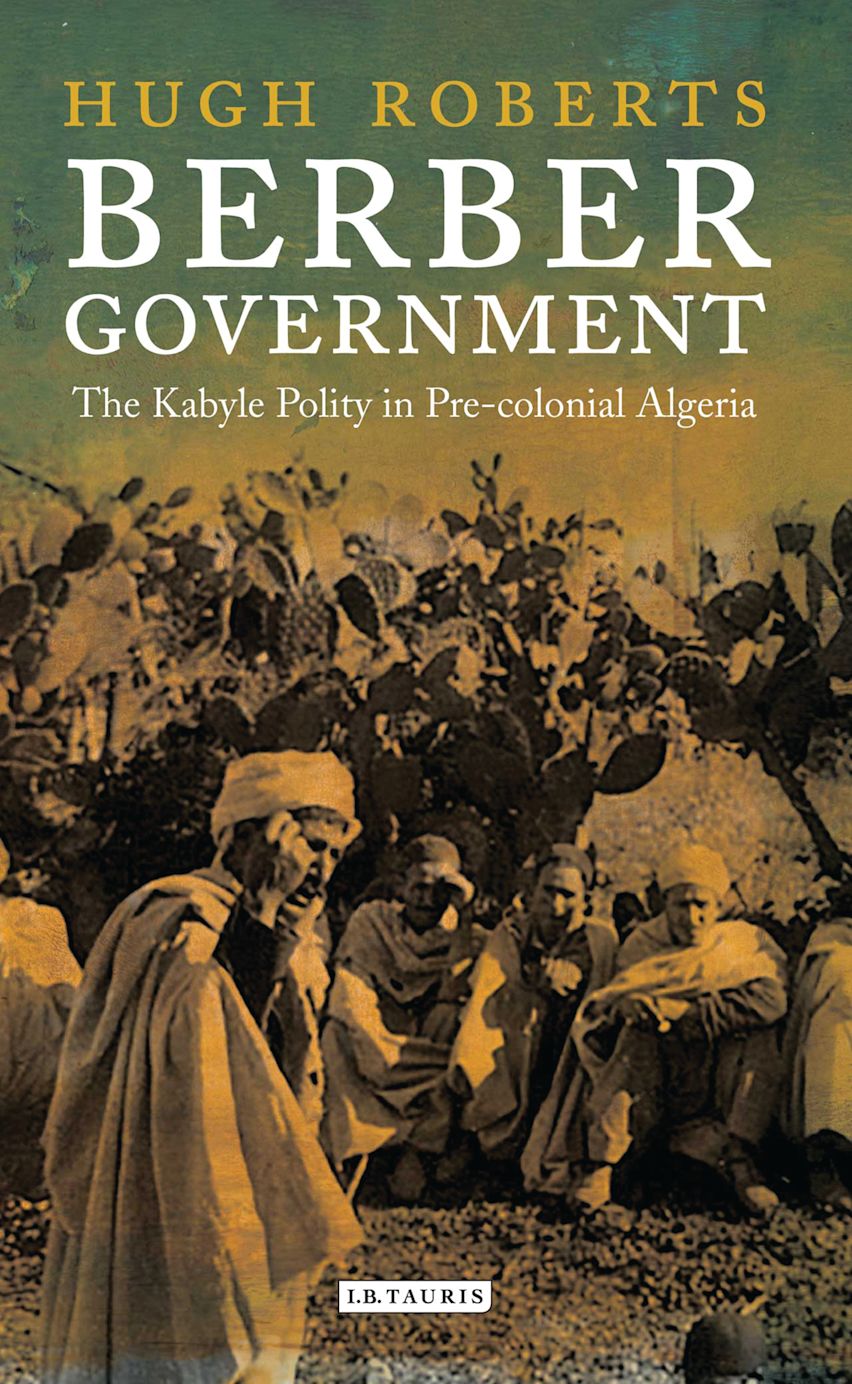
The Berber identity movement in North Africa was pioneered by the Kabyles of Algeria. But a preoccupation with identity and language has obscured the fact that Kabyle dissidence has been rooted in democratic aspirations inspired by the political traditions of Kabylia itself, a mountainous region in northern Algeria. The political organisation of pre-colonial Kabylia, from which these traditions originate, was well-described by nineteenth-century French ethnographers. But their inability to explain it led to a trend amongst later theorists of Berber society, such as Ernest Gellner and Pierre Bourdieu, to dismiss Kabylia’s political institutions, notably the jema’a (assembly or council), and to reduce Berber politics to a function of social structure and shared religion. In Berber Government, Hugh Roberts explores the remarkable logics of Kabyle political organisation and the unusual degree of autonomy it enjoyed in relation to both kinship divisions and the religious field. Combining political anthropology and political and social history in an interdisciplinary analysis, this book further offers a pioneering account of the history of Kabylia during the Ottoman period and establishes a radically new way to understand the complex place of the Kabyles in Algerian politics.
Reviews
‘Shattering the views of Orientalists and nativists alike, this massively erudite and ruthlessly precise book takes the reader on an exhilarating detective hunt through barely-known sources, exposing a rich political history of Berber self-government that generations of researchers have missed. This is a landmark study that decisively changes the received wisdom on Berbers, Algeria, and the political history of the region. It is one of the best books I have read in Middle East Studies in recent years.’